
How to Choose the Right Promotional Products Suppliers for Your Organisation
Discover how to find and evaluate reliable promotional products suppliers in Australia. Tips on quality, MOQs, turnaround times, and more.

Written by
Layla Okoro
Event Merchandise
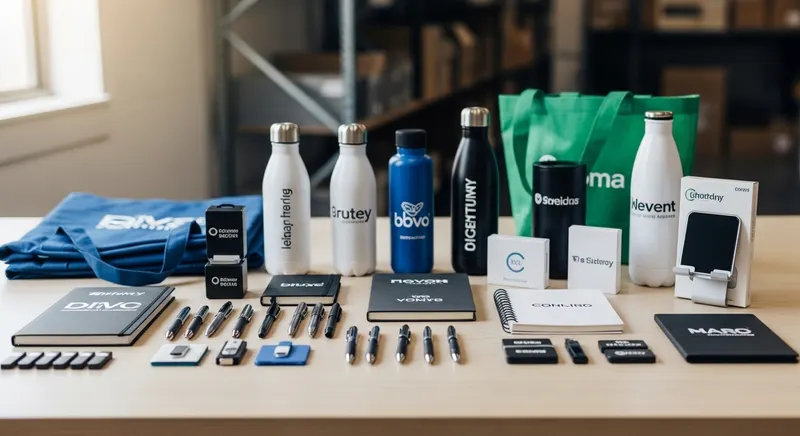
Choosing the right promotional products suppliers can make or break your next branded merchandise campaign. Whether you’re an event planner in Sydney coordinating a 500-person conference, a Melbourne-based HR manager sourcing staff onboarding kits, or a Brisbane sporting club needing custom apparel for the season ahead, the supplier you partner with will directly impact your product quality, delivery reliability, and overall budget. With hundreds of options across Australia, knowing what to look for — and what questions to ask — is essential before you commit to an order.
What Do Promotional Products Suppliers Actually Do?
It’s worth starting with a clear picture of what a promotional products supplier provides, because the industry is broader than many people realise. These businesses source, manufacture, and customise a wide range of branded items — from printed t-shirts and embroidered caps through to custom USB drives, personalised travel mugs, and even solar-powered branded calculators. The best suppliers act as full-service partners, guiding you through product selection, artwork preparation, decoration method choices, and final delivery.
Some suppliers operate as wholesalers, supplying only to registered businesses and resellers. Others work directly with end clients across corporate, education, government, and not-for-profit sectors. Understanding which model a supplier uses is your first step, as this affects pricing structures, minimum order quantities (MOQs), and the level of customer service you can expect throughout your project.
Decoration capabilities also vary significantly between suppliers. A supplier that specialises in screen printing may not offer the same quality in embroidery or sublimation, so it pays to match your chosen supplier to the type of product and finish you need. If you’re new to decoration methods, our guide on turnaround times for screen printing vs digital printing is a helpful starting point.
Key Factors to Evaluate When Comparing Promotional Products Suppliers
Not all suppliers are created equal. Here’s what experienced merchandise buyers in Australia look for when shortlisting partners.
Product Range and Breadth
A strong supplier should offer a comprehensive catalogue that covers multiple product categories. Think beyond the basics. Yes, you’ll want access to quality branded polo shirts and custom headwear like wide-brimmed hats, but what about more specialist items? Can they supply straw tote bags for an eco-conscious event, custom thermos drinking bottles for a corporate wellness campaign, or branded gym towels for a health club client?
The broader the range, the more likely you are to source everything through a single supplier — which simplifies invoicing, reduces freight costs, and ensures consistent branding across your entire merchandise suite.
Decoration Quality and Capabilities
Ask specifically what decoration methods a supplier offers and request samples where possible. Common methods include:
- Screen printing — Best for bold, flat-colour designs on apparel and bags
- Embroidery — Ideal for corporate polo shirts, caps, and workwear
- Sublimation — Outstanding for full-colour, all-over prints; great for sublimation-decorated shirts and sportswear
- Laser engraving — The premium option for drinkware, metal items, and awards
- Pad printing — Widely used for pens, USB drives, and small stationery items
- Heat transfer — Versatile and suitable for short runs on performance apparel
A reputable supplier will advise which method suits your artwork and product choice rather than defaulting to whatever is cheapest or easiest for them to produce.
Minimum Order Quantities (MOQs)
MOQs vary dramatically across the industry. Some product categories — particularly imported hard goods like USB drives or power banks — may require a minimum of 50 to 100 units. Custom apparel orders can often start from as few as 12 to 25 pieces, especially for embroidered items. Event-specific products like personalised stickers or printed stickers frequently have more flexible minimums, making them ideal for smaller campaigns.
Always confirm MOQs upfront, particularly if you’re a smaller organisation or running a one-off event. Ordering more than you need to hit a minimum just erodes your budget and leaves you with surplus stock.
Turnaround Times and Reliability
Turnaround time is one of the most common pain points when working with promotional products suppliers. Standard production time in Australia typically ranges from 7 to 15 business days after artwork approval, though this varies widely by product and supplier. Rush services are available from many suppliers, though they often attract a premium.
If you’re ordering for a fixed event date — say, an Adelaide trade show, a Canberra government expo, or a Gold Coast school sports day — always build in buffer time. Factor in artwork approval rounds, public holidays, and freight lead times when setting your internal deadline.
Pricing, Setup Fees, and Hidden Costs
Promotional merchandise pricing can be deceptively complex. The unit cost is just one component. Watch for:
- Setup/screen fees — Charged once per colour, per position, these can add $30 to $80+ per screen
- Freight costs — Particularly relevant for heavy items like waterproof bags or Titleist branded golf bags
- Sample charges — Many suppliers charge for pre-production samples
- Artwork fees — Some charge for redrawing or reformatting files that aren’t print-ready
Getting a fully itemised quote — rather than just a per-unit price — allows you to make genuine comparisons between suppliers.
Questions to Ask Promotional Products Suppliers Before You Order
Once you’ve shortlisted a few suppliers, there are specific questions worth raising before you commit.
Can you provide samples of this product? A physical sample is worth more than a digital mockup. Colour accuracy, material quality, and print finish can all look better on a screen than in person.
What are your artwork requirements? Most suppliers require vector files (AI or EPS) for screen printing and embroidery. Rasterised images at 300 DPI or higher are typically acceptable for digital and sublimation decoration. Ask this early to avoid delays.
Do you offer PMS colour matching? For brand-sensitive organisations — particularly councils, universities, and large corporates — Pantone Matching System (PMS) colour accuracy is non-negotiable. Not all suppliers offer this, and those that do may charge a premium.
What is your quality control process? Ask whether products are inspected before dispatch and whether you’ll receive photos or a pre-shipment inspection report for large orders.
What happens if something goes wrong? Understanding a supplier’s policy on reprints, refunds, and resolution processes before you order protects you if something unexpected occurs.
Specialised vs. Generalist Suppliers — Which is Right for You?
This is an important distinction. Generalist promotional products suppliers carry a wide range of items across categories but may not have deep expertise in any one area. Specialist suppliers focus on a narrower range — think custom apparel only, or exclusively eco-friendly merchandise — and often deliver a higher standard of product knowledge, quality control, and decoration within their niche.
For example, if you’re sourcing branded varsity jackets for a university or school, a supplier that specialises in custom apparel will likely offer better fabric options, more detailed embroidery work, and a stronger understanding of fit and sizing than a generalist catalogue supplier. Similarly, if your focus is sustainable merchandise — think recycled tote bags, bamboo stationery, and reusable drinkware — working with an eco-focused supplier may give you access to certified products and sustainability reporting that a generalist simply can’t provide.
That said, many organisations benefit from working with a small panel of two or three trusted suppliers — one for apparel, one for hard goods, and one for print items like personalised tea towels or vehicle signage and vehicle logo applications. This approach balances specialisation with convenience.
Considering White Label and Reseller Options
If you’re a marketing agency, event production company, or merchandise reseller rather than an end user, you may want to explore white label promotional products arrangements. Under these models, suppliers provide products without their own branding, allowing you to on-sell under your own label. This can be an efficient way to expand your service offering without holding inventory or investing in your own decoration equipment.
It’s also worth considering whether any suppliers you use offer seasonal ranges. Stocking up on winter branded blankets and beanies for staff gifts ahead of the cooler months, or sourcing summer event merchandise well in advance, can yield better pricing and avoid production bottlenecks during peak demand periods.
Building a Long-Term Supplier Relationship
The best outcomes in promotional merchandise come from genuine, long-term partnerships rather than one-off transactional orders. Suppliers who understand your brand guidelines, know your preferred decoration methods, and have your approved artwork on file can turn projects around faster and with fewer errors. Over time, you may also negotiate better pricing, priority production slots, and access to new products before they hit the general catalogue.
Investing in a good brief at the start of each project — covering your brand colours, logo formats, target audience, event date, and budget — will help your supplier deliver exactly what you need. Clear communication reduces back-and-forth, protects your timeline, and ultimately delivers better merchandise outcomes.
Conclusion: Key Takeaways for Sourcing the Right Promotional Products Suppliers
Finding the right promotional products suppliers in Australia takes a little research upfront, but the payoff is significant. Here’s a summary of what to remember:
- Evaluate the full picture — Compare product range, decoration capabilities, MOQs, turnaround times, and total costs (not just unit price) when assessing potential suppliers.
- Ask the right questions — Request samples, clarify artwork requirements, confirm PMS matching availability, and understand the supplier’s resolution process before committing.
- Match the supplier to the project — Generalist suppliers suit broad campaigns; specialist suppliers deliver superior results for niche product categories like custom apparel or eco merchandise.
- Consider reseller and white label models — If you’re an agency or reseller, white label arrangements can add genuine value to your service offering without significant overhead.
- Build long-term relationships — The more a supplier knows your brand and requirements, the faster, cheaper, and more consistent your promotional merchandise projects will become.
Whether you’re placing your first ever branded merchandise order or refining a well-established procurement process, partnering with the right promotional products suppliers is one of the highest-value decisions you can make for your brand.